

- Call for Sales Enquiries

- +91-9413034047
- +91-294-2413244
- info@pratibharefractory.com

Safe Storage of Kaolin Powder: Best Practices for Businesses

High Purity Talc Powder for Skin: A Global Manufacturer’s Guide
February 13, 2026
Key Role of Dolomite in Steel Manufacturing and Construction
March 2, 2026Safe Storage of Kaolin Powder: Best Practices for Businesses
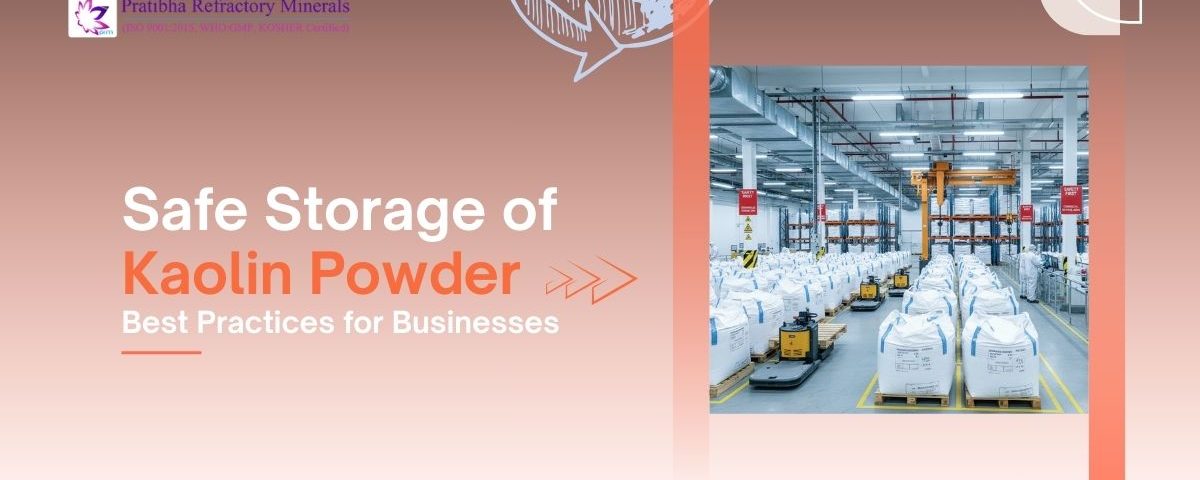
Proper Kaolin Powder Storage is very important in sectors like ceramics, paper, paints, rubber, and refractories to keep the quality of the products, keep workers safe, and keep materials from becoming lost. Plant managers, logistics directors, and safety officers know that mineral powders need to be handled in a certain way to minimise contamination, moisture damage, and operational inefficiencies.
Kaolin, or China clay, is a fine, white mineral that is very stable chemically, brilliant, and smooth. But if you don’t store things properly, they might clump together, get contaminated, create dust risks in the air, and slow down production. This article lists the best ways for firms to improve their storage conditions while still following safety rules for the industry.
Knowing how important it is to store kaolin properly with moisture control for industrial Kaolin clay
Kaolin powder is quite sensitive to the weather, especially humidity and things that are in the air. It is chemically stable, yet its small particle size makes it easy to:
- Taking in moisture
- Dust spreading
- Mixing with other materials by accident
- Damage to packaging during shipping
- Inefficient use of space in warehouses
- Bad storage can change the brightness, the size of the particles, and the overall uniformity of the product. These are all important factors in making paint, ceramic glaze, and paper coating.
- Structured Bulk Kaolin Powder Management systems not only keep products safe, but they also save money.
Important Risks in Storing Industrial Kaolin
Before putting solutions into action, it’s vital to know what the most typical hazards are:
1. Being exposed to moisture
Controlling moisture is one of the hardest things to do with industrial Kaolin clay. When kaolin is in a humid place, it absorbs moisture, which causes:
- Lumping or caking
- Less flowability
- Inefficiencies in processing
- It’s important to have humidity control systems and good sealing.
2. Getting dirty
To keep the quality of Kaolin storage, it’s important to know how to keep it from getting contaminated.
How to prevent contamination in Kaolin storage:
- Not separating correctly from other minerals
- Packaging that is broken
- Dust from things around it
- Dirty tools for dealing
Even little amounts of contamination can change how well a product works, especially in high-end uses like paper and speciality ceramics.
3. Dust in the Air Risks
When you handle fine mineral powders, they can go into the air, which can be bad for your lungs. Following the Industrial Kaolin Safety Protocols lowers the risk of exposure and makes sure that workers’ health standards are met.
How to Store Kaolin Powder the Right Way
1. Keep it in a dry, controlled place.
The humidity level should stay below what is suggested for industry. There should be in warehouses:
- Dehumidifiers or systems that control the weather
- Good air flow
- Roofing that doesn’t leak
- Raised floors to keep moisture from getting into the ground
This directly helps with good Kaolin Powder Storage and stops the goods from going bad.
2. Use the Right Packaging
People usually keep kaolin in:
- HDPE bags with a layer of plastic
- FIBCs, or jumbo bags
- Containers for bulk goods that are sealed
- Silos for big jobs
- Make sure the packaging is airtight and won’t tear. To keep other bags from getting dirty, you should separate damaged ones right away.
3. MSDS guidelines for Kaolin powder handling
It is very important to follow the MSDS rules for how to handle Kaolin powder. Material Safety Data Sheets give extensive advice on:
- How to handle things safely
- Suggested safety gear
- How to respond to fires and spills
- Suggestions for the temperature of storage
- To make sure that everyone follows the rules, safety officers should hold regular training sessions.
How to safely handle kaolin clay
When handling kaolin clay safely, you need to think about both safety and how to do your job.
- Personal Protective Equipment (PPE)
- People who work with bulk powder should use:
- Masks for dust or breathing
- Gloves for protection
- Goggles for safety
- Clothes that keep you safe
- This lowers the chances of breathing in or touching the skin while loading and unloading.
- Systems for Controlling Dust
In plants that handle a lot of material, set up dust extraction machines and enclosed transport systems. Automated conveyor systems cut down on the need for people to handle things by hand and the spread of things through the air.
- Training and standard operating procedures
- Standard Operating Procedures (SOPs) must make it clear:
- Receiving rules
- Rules about where to put things in storage
- How to handle spills
- Steps to take in an emergency
- Regular audits make sure that the China Clay handling Guidelines and the company’s own safety rules are being followed.
- Optimizing warehouse space for mineral powders
- Good warehouse architecture is very important for managing bulk kaolin powder.
- To make storage more efficient:
- Use vertical stacking techniques as long as they are safe for the load.
- Clearly label batches for FIFO (First-In-First-Out) rotation.
- Set aside specific areas for mineral powders
- Keep raw and processed materials apart.
Making the most of warehouse space for mineral powders not only makes operations more efficient, but it also cuts down on handling time and the risk of cross-contamination.
How to Keep Kaolin Storage Clean
To properly deal with how to keep Kaolin storage clean, companies should:
- Keep separate storage places for kaolin.
- Do not mix storage with products that are reactive or coloured.
- Before you use forklifts and other equipment, make sure they are clean.
- Put in loading docks that are sealed
- Do quality tests on stored batches every so often.
- Regular inspections make sure that contamination or moisture problems are found early on, before they hinder productivity.
- Things to think about when it comes to transportation and logistics
Logistics managers must make sure:
- Before loading, the trucks must be clean and dry.
- The seals on bulk containers are correct.
- Transit routes keep you out of the rain and humidity as much as possible.
- Each package comes with the right paperwork.
- You should keep an eye on temperature changes during transport, especially during the monsoon season.
- Picking a Trustworthy Supplier
- To make good storage, you need to have high-quality materials from reliable providers. Pratibha Refractory Minerals is a well-known supplier of high-quality kaolin and refractory minerals for use in industry.
- Because they know a lot about processing minerals and quality control, they can make sure that their products meet the same high standards for the paper, ceramic, paint, and refractory industries.
- For additional information, go to https://www.pratibharefractory.com/. Working with a dependable source lowers the hazards that come with variable particle size, contaminants, and weak packaging.
- Following the rules and keeping an eye on things all the time
Setting up storage for industrial minerals shouldn’t be a one-time thing. Long-term stability is guaranteed by constant monitoring.
Best practices are:
- Monthly checks of the warehouse
- Checks on humidity every so often
- Keeping records of how things are stored
- Internal safety checks
- Systems for tracking batches
- Following organised Industrial Kaolin Safety Protocols makes it easier to follow rules and makes the workplace safer.
In conclusion
Proper storage of kaolin powder is important for keeping the quality of the product, keeping workers safe, and making operations go as smoothly as possible. Businesses may greatly lower the danger of losing materials and harming people by using structured storage systems, managing moisture levels, following MSDS rules, and keeping rigorous safeguards in place to stop contamination.
Plant managers, logistics chiefs, and safety officials in the paper, ceramic, and paint sectors must follow these best practices not just to stay in compliance, but also to protect productivity and profits.
Companies can make sure that their kaolin management is safe, efficient, and of high quality by properly planning, following through on their plans, and getting help from reliable suppliers like Pratibha Refractory Minerals.