

- Call for Sales Enquiries

- +91-9413034047
- +91-294-2413244
- info@pratibharefractory.com

Key Role of Dolomite in Steel Manufacturing and Construction

Safe Storage of Kaolin Powder: Best Practices for Businesses
February 21, 2026
5 Costly Mistakes Importers Make When Buying Talc Powder in Bulk
March 16, 2026Key Role of Dolomite in Steel Manufacturing and Construction
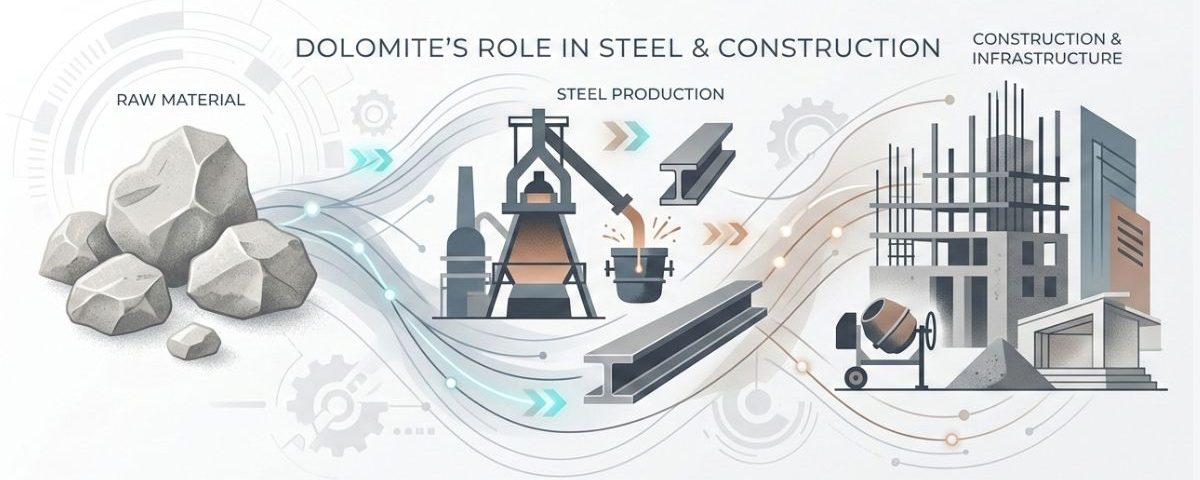
Heavy industries need things to be precise, last a long time, and keep the process stable. Dolomite for Steel Manufacturing is an important part of those industries. It’s not just a raw material; dolomite is an important part of many fields. It can make infrastructure-grade concrete and blast furnaces work better.
Engineers, people who work in steel plants, and procurement teams need to know about the right grade, composition, and sourcing standards of dolomite because it affects how well they do their jobs and how long buildings last.
Finding out how dolomite is used in business
Dolomite is a naturally formed carbonate mineral that has a lot of calcium and magnesium in it. It is good for building and working at high temperatures because it has a lot of magnesium.
In business, dolomite is used in three main ways:
- Dolomite as it is in the wild
- Dolomite that has been crushed
- Powdered limestone that is good for steel
Each type is used for a different job in the building and steel businesses.
Steel is made from dolomite.
1. Dolomite is used to make steel as a fluxing material.
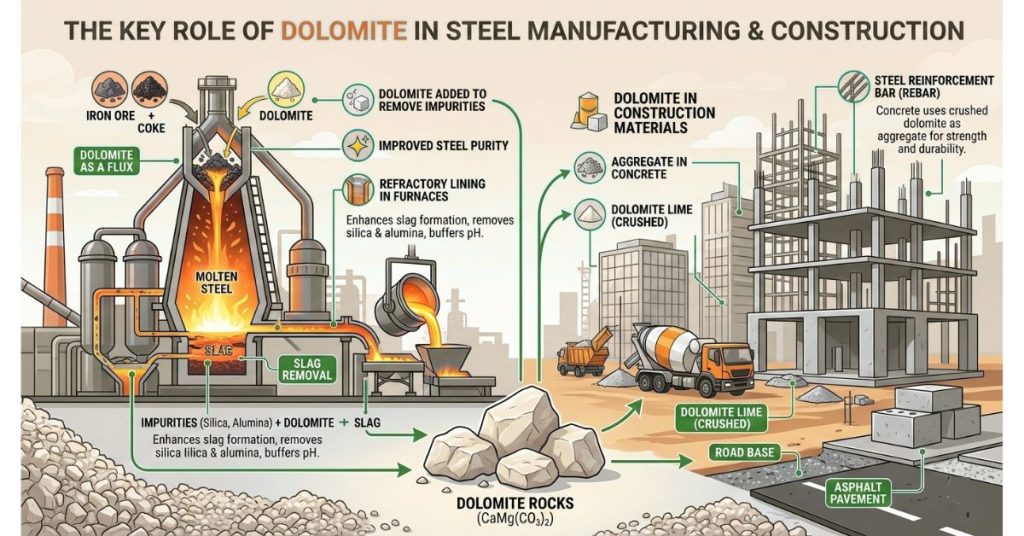
Dolomite is used in a very important way when making in Dolomite as a fluxing agent in steel making. In blast furnaces and basic oxygen furnaces (BOF), dolomite is used because:
- Gets rid of pollution such as phosphorus and sand
- Makes slag to find and sort useless parts
- Keeps the chemistry of flames stable
- Stops wear that won’t go away
As magnesium oxide (MgO) is added to dolomite, it makes the slag more basic and helps the desulfurization process work better. Because of this, the quality of the steel and the amount of work that can be done can be affected.
2. How dolomite changes the way a blast furnace works
There is a clear link between dolomite and how well a Impact of dolomite on blast furnace efficiency works:
- Better movement of slag
- Fewer cracks that won’t go away
- Putting out less fuel
- Better ability to handle heat
MgO levels stay stable thanks to high-quality steel-grade dolomite powder. This keeps things running smoothly and the furnace’s integrity over long production cycles. This means that steel plant workers will have less downtime, refractory linings will last longer, and production will be more stable.
3. What Refractory Dolomite Is Used For
Dolomite is used for many hot linings because
- Simple oxygen heaters for everyday use
- Sparks electric arcs
- Spoons
- Fire kilns for cement
For refractory dolomite uses, you need dolomite that has been calcined or dead-burned and can handle temperatures above 1700°C. Steel companies that work in very hot conditions can’t do without it because it doesn’t react with chemicals.
How to Find Calcined Dolomite and Where to Get It
Teams that buy calcined Dolomite Suppliers need to be sure of the following things in order to find trusted sellers:
- What Chemicals Are Made Of
- A lot of MgO
- Enough silicon to be controlled
- Not very dirty
- Every time the particles are the same size
- Uniform scoring makes sure that the heater will work the way you expect it to.
- Being able to supply in bulk
- Steel companies need supply chains that can handle a lot of goods and don’t break down.
- Export Standards Around the World
When steel plants around the world buy industrial dolomite, they have to make sure it meets international quality standards.
Companies like Pratibha Refractory Minerals make high-quality dolomite goods for the steel and Dolomite Applications refractory industries. They make sure that even the pickiest industry users always get the best results because they know a lot about mineral processes and supply logistics.
Dolomite in the Business of Building
Dolomite isn’t just used to make steel. Plus, more and more people are using it to build things, especially big infrastructure projects.
1. Rocks and other fillers
- Crushed dolomite is often used for:
- What roads are built on
- Track ballast for trains
- A mix of asphalt
- It’s great for roads and factory floors because it’s hard and dense, so it can hold a lot of weight.
2. Building projects that need dolomite with a lot of magnesium
- When used in building projects, high-magnesium dolomite for infrastructure projects:
- How long does concrete last?
- Being able to handle weathering
- How stable the structure is
- Its chemicals help cement strengthen and make it less likely to crack, which is important in places like ports and bridges that get a lot of use.
3. The use of dolomite powder in stone and cement
- This very fine dolomite powder is employed in
- Make the clay stronger.
- Help people do things better.
- Improve the look of the skin
Civil engineers need to make sure that the materials they use are always the same so that buildings last and meet engineering standards.
Why is Steel Grade Dolomite Powder good?
- Sourcing industrial dolomite for global steel plants
- At least 18–22% MgO is present.
- Between 28% and 32% CaO
- SiO₂: Not much
- Keeps the water away
- Size of the Particles: It Depends on the Use
- High-purity material keeps burner operations steady by limiting changes in the amount of slag that is produced.
- Getting things in a smart way for steel plants all over the world
- There are strict plans for how things are made in steel plants. Any change in the raw materials will show up in the end product.
These things come to mind when steel companies around the world look for industrial dolomite:
- Who owns the mine and how safe the reserve is
- Modern tools for calcination
- Labs to check the strength
- Know-how in export handling
- Changeable particle sizes
Thanks to partners like Pratibha Refractory Minerals, supply lines are safe. That is why they are the best choice for heavy industry procurement teams, from the mines to the final transport.
Conclusion
There is still a lot of use for dolomite in the steel and Dolomite in construction industry. It helps furnaces work better, makes steel more pure, hardens building materials and makes refractories last longer.
In current times, dolomite is still used in many ways. To make steel, it is used as a fluxing agent. It is also used in refractory linings and as a filler in infrastructure. It’s important for steel plants and building projects to choose the right supplier so that quality stays steady, operations run smoothly, and the project lasts.