

- Call for Sales Enquiries

- +91-9413034047
- +91-294-2413244
- info@pratibharefractory.com

Sourcing Dolomite Powder from India in 2026-27

China Clay Price from India 2026: What Drives Kaolin Costs for Importers
July 12, 2026
Talc Powder Purification: What Industrial Buyers Should Verify in 2026
July 22, 2026Sourcing Dolomite Powder from India in 2026-27
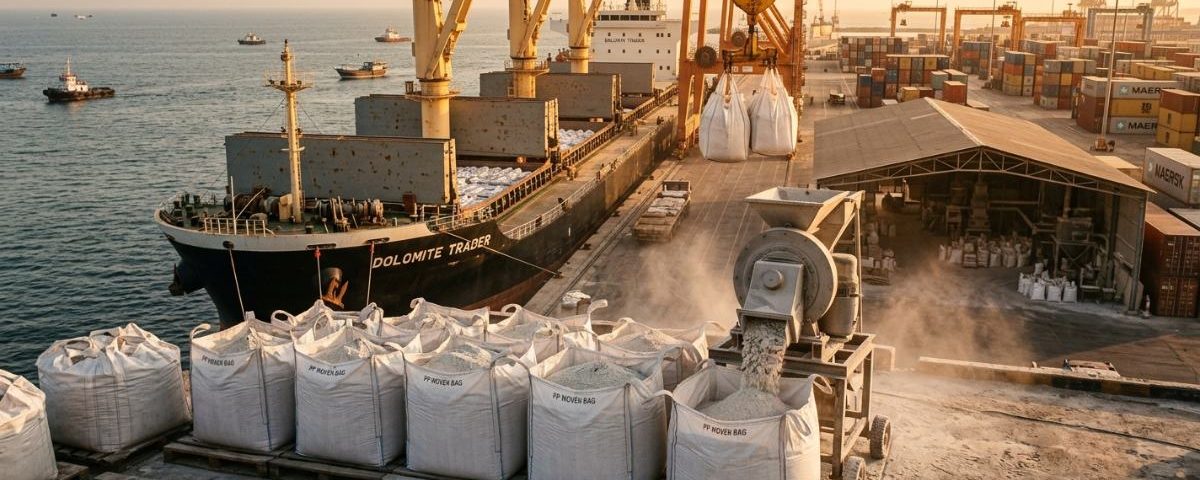
If you buy dolomite powder in Asia, your supply map is being redrawn – and no one sent a memo. For years, buyers in Vietnam, Bangladesh and Nepal defaulted to Chinese mineral suppliers out of habit. In 2026 that default is quietly breaking down.
The reason is not price. It’s predictability. Through 2025 and into 2026, China turned export licensing into a strategic lever across a widening list of minerals and materials. Even where dolomite itself isn’t restricted, the message reached every procurement desk: a supply chain that runs through one country can be paused by one policy. Buyers who lived through the rare-earth licensing shocks aren’t waiting to find out if dolomite is next.
That’s the opening for India – now the world’s second-largest dolomite producer, sitting right on the sea lanes into Southeast and South Asia. This brief is written for the buyer making that switch: what grades to ask for, how to read a spec sheet, and how to qualify an Indian supplier so the first container arrives right, not just cheap.
| Quick answer – why this matters in 2026-27 Dolomite powder is ground calcium magnesium carbonate, CaMg(CO3)2. It’s essential flux and refractory feed for steel, glass and ceramics. As Asian buyers diversify away from single-country mineral dependence, India has become the natural alternative source for Vietnam, Bangladesh and Nepal – close by sea, second-largest global producer, and priced competitively. The catch: quality varies by supplier, so spec discipline matters more than ever. |
What This Brief Covers
The Quiet Sourcing Shift Nobody Announced……………………………………………………………………………. 1
What This Brief Covers…………………………………………………………………………………………………………. 1
Why Asian Buyers Are Rethinking Where Their Minerals Come From…………………………………………….. 3
Dolomite Powder in 60 Seconds……………………………………………………………………………………………… 3
Grades & Specifications: What to Actually Order……………………………………………………………………….. 3
How to Read a Batch Certificate……………………………………………………………………………………………… 4
Mesh Sizes: Match to Process, Not Habit………………………………………………………………………………….. 4
Application Guide by Sector…………………………………………………………………………………………………… 4
Market Spotlight: Vietnam, Bangladesh & Nepal (2026-27)…………………………………………………………. 5
How to Qualify an Indian Dolomite Supplier……………………………………………………………………………… 6
Landed Cost & Logistics: The Real Comparison………………………………………………………………………….. 6
Outlook 2026-27: What Buyers Should Plan For………………………………………………………………………… 6
Your Sourcing Checklist………………………………………………………………………………………………………… 7
Frequently Asked Questions………………………………………………………………………………………………….. 7
The Bottom Line………………………………………………………………………………………………………………….. 9
SEO & Publishing Assets………………………………………………………………………………………………………. 10
Why Asian Buyers Are Rethinking Where Their Minerals Come From
Three forces are pushing importers in your region to build a second, non-Chinese source for bulk minerals like dolomite. None of them are going away in 2026-27.
- Policy risk is now normal, not exceptional. China’s use of export licensing across critical materials through 2025-26 showed how fast access can tighten. Smart procurement teams now treat single-country dependence as a live risk, not a background one.
- Your own steel industries are scaling fast. Vietnam is now among the world’s top 10 crude-steel producers, with output forecast near 27 million tonnes in 2026, up about 10% year-on-year. More furnaces mean more flux and refractory demand – and more exposure if that feed comes from one place.
- India got closer, cheaper and more reliable. As the second-largest global producer with deep reserves and short sea routes into your ports, India offers a genuine alternative rather than a fallback.
Dolomite Powder in 60 Seconds
Dolomite powder is dolomite rock – a double carbonate of calcium and magnesium, CaMg(CO3)2 – crushed, dried, ground and screened to a controlled particle size. It’s valued as a low-cost source of both calcium oxide (CaO) and magnesium oxide (MgO).
Pure dolomite theoretically holds 54.35% CaCO3 and 45.65% MgCO3. In trade, any rock carrying 40-45% MgCO3 counts as dolomite. For your purposes as a buyer, three numbers on the spec sheet decide everything: the CaO/MgO ratio, the iron content, and the mesh size.
Grades & Specifications: What to Actually Order
Don’t order ‘dolomite powder.’ Order a grade against a spec. Here are the commercial grades Indian producers ship, with typical ranges – always confirm against a supplier’s tested batch certificate.
| Grade | Notes | CaCO3 | MgCO3 | Typical Mesh | Best For | ||
| Refractory / SMS | High purity, low iron; impurities <3% | ~54% | ~45% | 20-200 mesh | Steel furnace flux, linings | ||
| Ferro-alloy | CaCO3+MgCO3 >=95%; SiO2 <3% | ~52-54% | ~43-45% | 30-100 mesh | Ferro-alloy fluxing | ||
| Glass grade | Fe2O3 <=0.1% for clear glass | ~54% | ~45% | 100-300 mesh | Float & sheet glass batch | ||
| Ceramic / filler | High whiteness 90-98% | 54%+ | 44%+ | 325-1200 mesh | Tiles, paint, polymer filler | ||
| Agriculture | Coarser; pH buffering | ~54% | ~45% | 50-150 mesh | Soil conditioning, Mg supply | ||
| The one spec that rejects containers Iron oxide. For clear/float glass, insist on Fe2O3 at or below 0.1% – higher iron tints the glass green and fails inspection. For steel and ferro-alloys, keep combined impurities under 3% for dead-burning and total insolubles under 7%. Get this line wrong on the PO and the whole consignment can be unusable. | |||||||
How to Read a Batch Certificate
Every serious Indian supplier issues a per-batch certificate. Read it against these benchmarks before you release payment or accept delivery.
| Parameter | Typical Value | Why It Matters to You |
| CaCO3 | 52-54% | Fluxing power; lime source |
| MgCO3 | 43-45% | MgO source; refractory value |
| Fe2O3 | 0.1-1% (<=0.1% clear glass) | High iron discolours glass & ceramics |
| SiO2 + Al2O3 | <7% combined | Above 7% limits industrial use |
| Brightness | 90-98% (filler grades) | Decides paint/polymer suitability |
| Moisture | <0.5% | High moisture = lumping in transit |
Mesh Sizes: Match to Process, Not Habit
Mesh number is openings per linear inch – higher number, finer powder. Ordering finer than your process needs just raises the price.
- 50-100 mesh (coarse): agriculture, flux, construction aggregate.
- 100-325 mesh (medium): glass batch, general industrial use.
- 325-1200 mesh (fine/ultra-fine): paint, plastic, rubber, ceramics – where finish and low shrinkage matter.
Application Guide by Sector
How each industry in your region uses dolomite, and the grade that fits.
| Industry | Why Dolomite | Recommended Grade | Benefit |
| Steel | Flux; conditions slag, removes impurities | Calcined / SMS | Cleaner melt, protected lining |
| Glass | MgO & CaO source in batch | Low-iron glass grade | Clarity, durability |
| Ceramics | Body & glaze flux | Fine white grade | Low shrinkage, smooth finish |
| Refractories | Furnace linings, ramming mass | Dead-burned | High-temperature resistance |
| Paint / Polymer | Extender & filler | Micronized white | Brightness, lower resin cost |
| Construction | Cement & concrete additive | Standard ground | Stronger, crack-resistant |
| Agriculture | Soil pH buffer, Mg & Ca | Ag grade | Healthier soil, better yield |
| Water treatment | pH correction, remineralisation | Fine grade | Balanced, safer water |
Market Spotlight: Vietnam, Bangladesh & Nepal (2026-27)
Generic guides stop at ‘Asia is growing.’ Here’s what’s actually happening in the three markets that pull the most Indian dolomite – and what it means for your buying plan.
Vietnam – a new top-10 steelmaker, hungry for flux
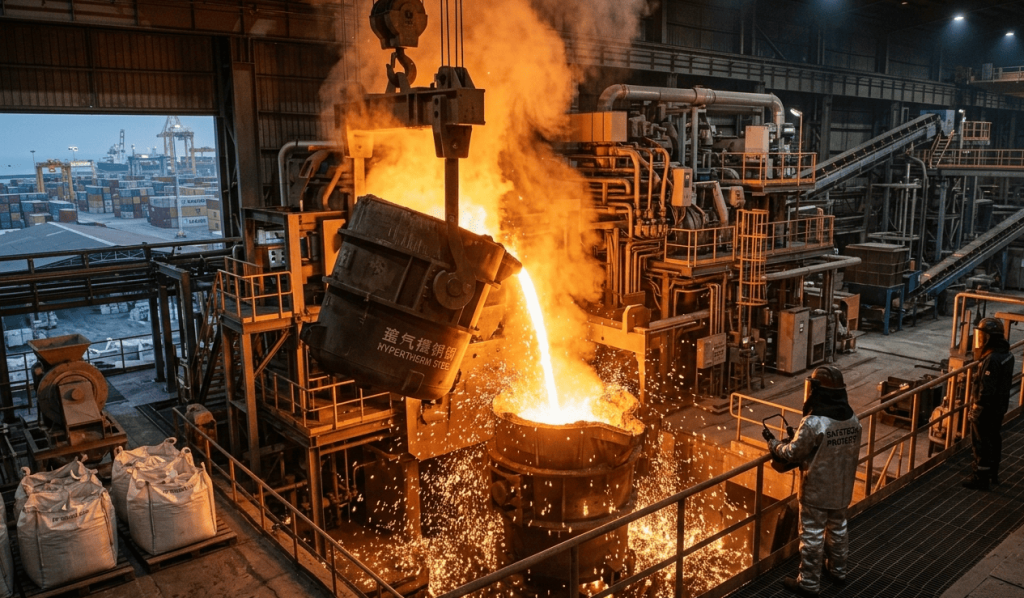
Vietnam has crossed into the world’s top 10 crude-steel producers. Output is forecast around 27 million tonnes in 2026 (up ~10% YoY), with leading mills expanding capacity sharply. More furnaces mean structurally higher demand for fluxing and refractory dolomite – and Vietnamese buyers are actively diversifying raw-material sources as the industry scales.
- What to source: calcined / SMS refractory grade for steel; low-iron glass grade for the growing float-glass segment.
- Buyer note: Vietnamese quality-compliance rules are tightening – clean batch documentation is now a qualifier, not a nicety.
Bangladesh – construction and steel driving bulk demand
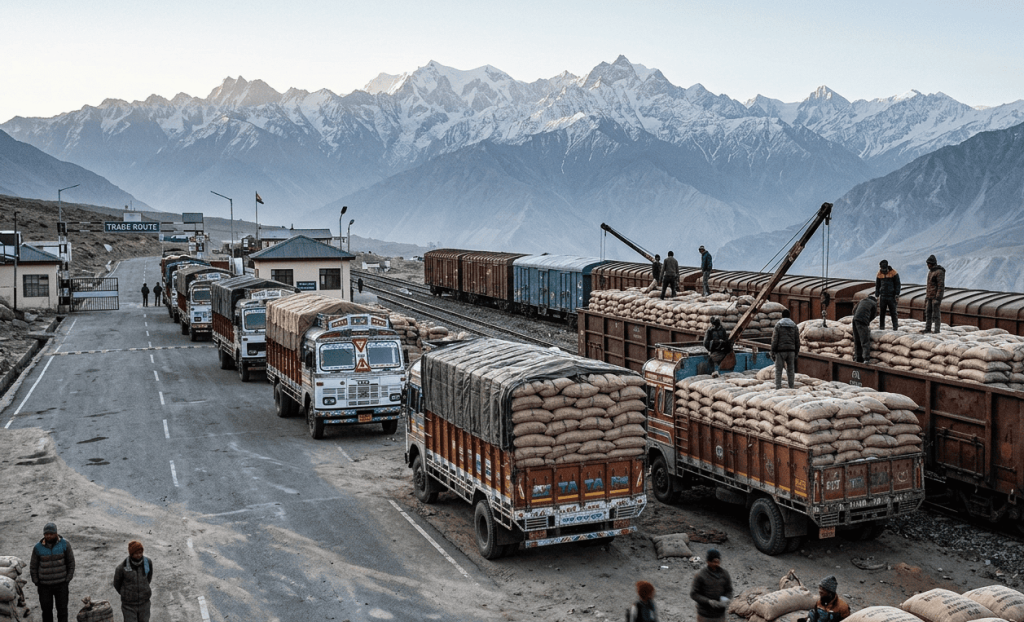
Bangladesh sits among the Asia-Pacific construction markets pulling rising dolomite volumes, alongside steady steel-sector growth. It’s already one of India’s established export destinations for graded dolomite, and short sea/land routes keep freight – the swing factor in a bulk mineral’s landed cost – competitive.
- What to source: standard ground grade for cement/construction; refractory grade for steel re-rolling and melting.
- Buyer note: prioritise moisture-proof packing for monsoon-season shipments to avoid lumping.
Nepal – landlocked, so freight and reliability decide
For Nepali buyers, India isn’t just an alternative source – it’s the practical one. Land connectivity makes Indian dolomite far easier to move than seaborne Chinese material, and proximity cushions against the freight cost that dominates a low-unit-value commodity.
- What to source: agriculture grade for acidic-soil regions; construction and refractory grades for growing industry.
- Buyer note: consistency across repeat orders matters most here – qualify a supplier who owns reserves rather than trades spot material.
How to Qualify an Indian Dolomite Supplier
Switching sources only pays off if the new supplier is reliable. Price is the easiest thing to compare and the worst thing to decide on. Use this checklist instead.
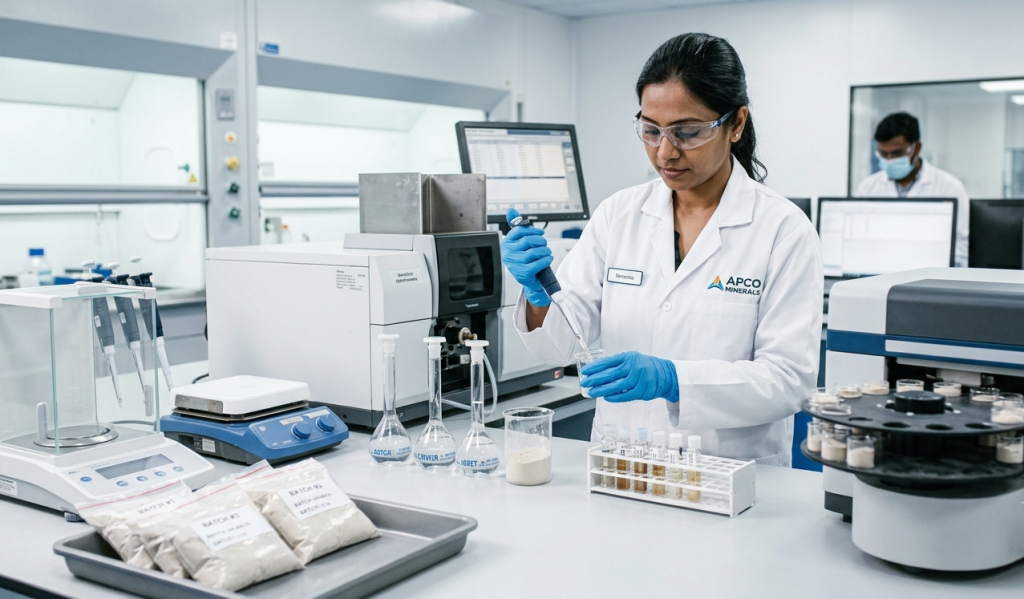
- Ask for the last three batch certificates – one sample proves nothing about consistency.
- Confirm in-house or accredited lab testing for CaO/MgO, iron and brightness.
- Check grinding capability actually matches your mesh (do they run ultrafine mills?).
- Prefer suppliers who own reserves/mines – less quality drift when they switch source rock.
- Verify export experience: documentation, moisture-proof packing and container loading all differ from domestic supply.
- Look for BIS and ISO 9001 as signals of process discipline.
- Run a trial container and test it in your process before signing an annual contract.
| Common cross-border buying mistakes 1) Deciding on price per tonne, ignoring landed cost and rejection risk. 2) Accepting one sample as proof of consistency. 3) Overlooking iron content for glass/ceramic use. 4) Ordering finer mesh than the process needs. 5) Skipping a trial container before a large contract. 6) Under-specifying packing for humid or monsoon transit. |
Landed Cost & Logistics: The Real Comparison
Dolomite is a high-bulk, low-value commodity – which means freight often decides the winner, not the ex-works price. When you compare an Indian quote against your current source, compare landed cost:
- Ex-works or FOB price per tonne, at your agreed spec.
- Sea/land freight to your port or plant – India’s proximity to South and Southeast Asia is a real edge here.
- Packing (bags vs jumbo bags vs bulk) and any moisture-proofing for humid transit.
- Duties, clearance and inland haulage on your side.
- Expected rejection/rework rate – a cheaper, inconsistent batch can erase every dollar saved.
Run that full stack, and a disciplined Indian supplier frequently lands lower than a cheaper-looking quote from farther away or a less consistent source.
Outlook 2026-27: What Buyers Should Plan For
- Supply diversification stays a priority. The push to hold a second, non-single-country mineral source is structural now, not a passing reaction.
- Steel-led demand keeps climbing. Vietnam’s top-10 rise and regional construction growth pull more flux and refractory dolomite through 2026-27.
- Low-iron and fine grades tighten. Float-glass and ceramic growth raise demand for high-purity, high-brightness material – lock these in early.
- Compliance and documentation matter more. Importing markets are tightening quality rules; clean batch paperwork is becoming a qualifier.
- Freight remains the swing factor. Energy and shipping costs will keep deciding landed price – India’s proximity is a durable advantage.
Your Sourcing Checklist
- [ ] Written spec: CaO/MgO, Fe2O3 ceiling, mesh, brightness, moisture.
- [ ] Last three batch certificates reviewed for consistency.
- [ ] Grade matched to application (no over-spec on mesh).
- [ ] BIS / ISO 9001 and lab testing confirmed.
- [ ] Export experience and moisture-safe packing verified.
- [ ] Trial container tested in your process.
- [ ] Landed cost compared end-to-end, not just ex-works.
- [ ] Supplier owns reserves / offers repeat-order consistency.
Frequently Asked Questions
Q: Why source dolomite from India instead of China in 2026?
A: India is the world’s second-largest dolomite producer, sits on short sea and land routes into South and Southeast Asia, and offers competitive landed costs. As Asian buyers diversify away from single-country mineral dependence following China’s export-licensing moves, India has become the natural alternative source – reliable, close and priced to compete.
Q: Is Indian dolomite good enough for steel and glass?
A: Yes, provided you order to spec. Indian producers ship refractory/SMS grades for steel and low-iron grades (Fe2O3 <=0.1%) for clear glass. The key is qualifying the supplier on batch consistency and lab testing, not assuming all Indian material is equal. Always confirm chemistry on the batch certificate.
Q: Which grade should Vietnamese steel importers order?
A: Calcined or SMS refractory grade with high purity and low iron for furnace fluxing and linings, plus low-iron glass grade if you also supply the float-glass segment. With Vietnam’s steel output climbing past 27 million tonnes in 2026, locking in consistent refractory-grade supply early is worth more than chasing the lowest price.
Q: What matters most for Bangladesh buyers?
A: Freight-efficient sourcing and moisture-proof packing. Bangladesh’s construction and steel growth pulls bulk volumes, and short routes from India keep landed cost competitive. Because much shipping crosses humid and monsoon conditions, specify sealed, moisture-safe packaging to avoid lumping and rejected consignments on arrival.
Q: Why is India the practical choice for Nepal?
A: Nepal is landlocked, so overland connectivity from India makes Indian dolomite far easier and cheaper to move than seaborne material. For a high-bulk, low-value commodity, that freight advantage is decisive. Prioritise a supplier who owns reserves and can deliver consistent chemistry across repeat orders.
Q: How do I compare an Indian quote against my current supplier?
A: Compare landed cost, not ex-works price. Add freight, packing, duties, clearance, inland haulage and expected rejection rate to the per-tonne price. India’s proximity to Asian ports often wins on freight, and a consistent supplier avoids the hidden cost of rejected batches – which can erase any headline saving.
Q: What certifications should the supplier have?
A: Look for BIS (Bureau of Indian Standards) conformance and ISO 9001 for quality-management discipline. Most important in practice is a per-batch test certificate covering CaO/MgO, iron, brightness and moisture. Certifications show systems exist; the batch certificate proves what’s in the container you’re paying for.
Q: Why does iron content matter so much?
A: Iron oxide (Fe2O3) discolours end products. For clear or float glass, dolomite must hold no more than about 0.1% Fe2O3 or the glass tints green and fails inspection. Ceramics and white fillers also need low iron for brightness. For steel and agriculture, iron is far less critical, so you can accept higher-iron grades at lower cost.
Q: What mesh size should I order?
A: Match mesh to your process. Coarse 50-100 mesh for agriculture, flux and construction; 100-325 mesh for glass and general industry; 325-1200 mesh for paint, plastic, rubber and ceramics. Ordering finer than needed only raises cost without benefit, so specify against the actual process requirement.
Q: How do I protect against supply disruption?
A: Qualify a second, non-single-country source and hold a modest buffer stock of critical grades. The 2025-26 export-licensing episodes showed how fast access can tighten. A reliable Indian supplier as your second source, plus clear spec and documentation, is cheaper insurance than a production stoppage.
Q: What is calcined dolomite and when do I need it?
A: Calcined dolomite is heated to around 900-1000C, driving off CO2 and converting it to reactive calcium and magnesium oxides. It’s the workhorse of steel fluxing and slag conditioning. Dead-burned dolomite is fired hotter still for durable furnace linings. Order calcined for flux, dead-burned for refractory lining work.
Q: How should I handle packing for humid or monsoon transit?
A: Specify sealed, moisture-proof packaging – laminated or lined bags, or moisture-barrier jumbo bags – and confirm clear grade, mesh and batch labelling. Dolomite that absorbs moisture lumps and loses flow, which can lead to rejection on arrival. For Bangladesh and monsoon-season shipments this is essential, not optional.
Q: Can I get consistent quality across repeat orders?
A: Yes, if you choose the right supplier. Consistency comes from owned reserves, disciplined grinding and per-batch lab testing. Ask for several past batch certificates to judge variation before committing. Suppliers who trade spot material from mixed sources are far more likely to drift batch to batch.
Q: What volumes and packaging are available?
A: Options run from 25 kg and 50 kg bags to 1-tonne jumbo bags and loose bulk for large mills. Bulk suits high-volume steel and cement users; bagged suits smaller or overland orders. For export, moisture-proof packing with clear labelling is standard – confirm both in the contract.
Q: Is now a good time to switch sources?
A: For most Asian buyers, yes. Demand is rising with steel and construction growth, supply diversification is a live priority, and India offers a close, competitive alternative. Qualifying a supplier and running a trial container now is far easier than reacting under pressure if your current supply tightens later.
The Bottom Line
The dolomite you buy hasn’t changed. Where you buy it from is changing fast. Across Vietnam, Bangladesh and Nepal, the smartest procurement teams are building a reliable Indian source – not because it’s a trend, but because single-country dependence is a risk they can now price.
Define your spec, demand batch-level proof, compare landed cost end-to-end, and run a trial container before you scale. Do that, and India’s deep, close, competitively-priced dolomite base becomes exactly what your operation needs in 2026-27: a foundation you control.