

- Call for Sales Enquiries

- +91-9413034047
- +91-294-2413244
- info@pratibharefractory.com

Talc Powder Price per Kg & per Ton in India 2026: Grade-wise Rates

Dolomite Powder for Wall Putty: Properties & Grade Selection
October 14, 2026
Kaolin Powder Price & Suppliers in India for Ceramics & Paints
November 12, 2026Talc Powder Price per Kg & per Ton in India 2026: Grade-wise Rates
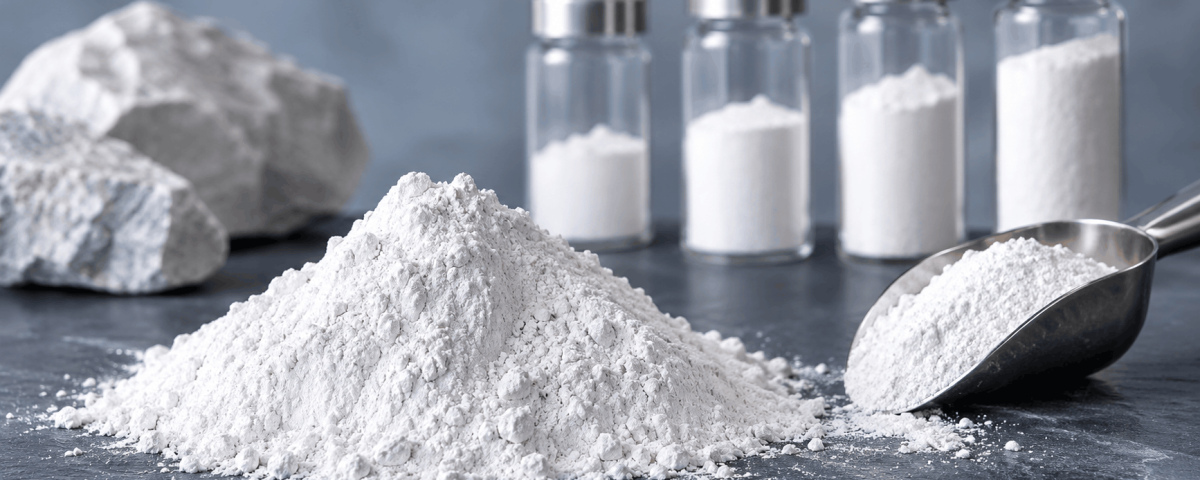
Talc powder is one of the most widely used industrial minerals in India. It goes into paints, plastics, rubber, paper, ceramics and, where the grade qualifies, cosmetics. Yet when a procurement manager asks for the talc powder price per kg or the talc powder price per ton, there is rarely a single answer.
Two lots that both look like “white talc” can differ sharply in purity, whiteness, mesh size, moisture and grinding quality. Each of these changes the processing effort behind the powder, and therefore the rate. This guide explains how talc powder pricing works in India in 2026, what indicative market figures look like, and how to compare quotations on specifications rather than on the headline number alone.
Talc Powder Price in India 2026: Per Kg and Per Ton
Quick answer: Based on supplier listings reviewed on 4 November 2026, industrial talc powder in India is listed at roughly ₹4.50 to ₹15 per kg (about ₹4,500 to ₹15,000 per ton). Specialised grades are listed higher. These are indicative figures, not quotations. Final prices depend on grade, mesh size, packaging and quantity.
India does not have a single official benchmark for domestic talc powder. Prices are set between buyer and supplier on the basis of specification and volume. The most visible public reference is supplier listings on Indian B2B marketplaces, and the table below summarises what those listings showed on 4 November 2026. One ton here means one metric ton (1,000 kg), so a rate of ₹10 per kg equals ₹10,000 per ton.
Indicative Grade-wise Talc Powder Price Comparison
| Category (as labelled by suppliers) | Indicative listed price per kg | Equivalent per metric ton | What to note |
|---|---|---|---|
| General industrial / paint and paper use | ₹4.50 – ₹8 | ₹4,500 – ₹8,000 | Usually coarser or lower-whiteness material; specification often not stated |
| Talc / soapstone powder, 300–700 mesh | ₹7 – ₹8 | ₹7,000 – ₹8,000 | Listings seen with a minimum order of around 500 kg |
| Ultra-fine, 800–1000 mesh | ₹8 – ₹9 | ₹8,000 – ₹9,000 | Finer grinding; listings seen for soap-making and general industrial use |
| White industrial talc, around 98% stated purity | ₹12 – ₹15 | ₹12,000 – ₹15,000 | Typically 25 kg or 50 kg bags |
| Cosmetic-labelled industrial talc | ₹7.50 – ₹12 | ₹7,500 – ₹12,000 | Label alone does not confirm cosmetic-grade compliance |
| Colour-making use | around ₹22 | around ₹22,000 | Single listing seen; tighter whiteness expected |
| Magnesium silicate powder (multi-application) | around ₹34 | around ₹34,000 | Positioned for paper, paints, ceramics and cosmetics |
| Talc dusting powder (BP-labelled) | around ₹40 | around ₹40,000 | Pharmacopoeial-type grade with stricter requirements |
How to read this table: The figures come from supplier-published listings on a leading Indian B2B marketplace, reviewed on 4 November 2026. Category names are the suppliers’ own and are not standardised, so ranges overlap. Listings do not consistently state whether GST, freight or packaging is included. Treat the table as a directional guide for budgeting, and request a written quotation against your exact specification.
On the wider market, an independent India-based price reporting service noted upward movement in Indian talc export prices in the first quarter of 2026, citing firm demand, higher logistics costs and limited supply growth. Domestic rates can shift with similar factors.
Talc Powder Price per Kg vs Per Ton: What Changes with Volume?
Quick answer: Per-kg pricing applies to small lots such as samples and trial orders, while per-ton pricing applies to bulk purchases. Larger volumes usually allow a lower rate because production, packing and dispatch are planned together. The exact difference depends on grade, packaging and destination, so it is confirmed only in a quotation.
A per-kg rate is common for samples, laboratory trials and first orders. A per-ton rate is how most industrial buyers plan and compare costs once a grade is approved.
Several practical points affect the move from per kg to per ton:
- Production planning: A full production run of one grade and mesh size is more efficient than several small, mixed lots.
- Packaging: Talc is commonly supplied in 25 kg or 50 kg bags. Bulk bags or palletised loads change both packing cost and handling.
- Freight: Full truck loads and container loads are priced very differently from part loads. Distance and destination state matter.
- Payment and delivery terms: Ex-works, FOR destination and FOB or CIF export terms are not directly comparable. Always compare like with like.
What Determines Grade-wise Talc Powder Pricing?
Quick answer: Talc powder prices change mainly with purity, whiteness, mesh or particle size, moisture content, the end-use requirement and the quality of processing and grinding. Higher purity, brighter colour and finer, more consistent particle size generally cost more because they need better ore selection and tighter process control.
Purity and mineral composition
Talc is a hydrated magnesium silicate. Ore with fewer accompanying minerals gives a cleaner powder, and it is also harder to source consistently. Higher stated purity generally commands a higher rate.
Whiteness and brightness
Buyers in paints, plastics and paper often specify whiteness because it affects the final colour of their product. Selecting brighter ore and controlling processing both add to cost.
Mesh size and particle size
Finer powders need additional grinding or micronisation and tighter classification. A 300 mesh powder and a 1000 mesh powder are not priced alike, and consistency from batch to batch matters as much as the nominal number.
Moisture content
Excess moisture affects flow, dispersion and shelf life, and it also adds weight you are paying for. Ask for moisture figures in the technical data sheet.
Application requirements
A grade for ceramics will not necessarily suit cosmetics or plastics. The tighter the application requirement, the narrower the choice of suitable ore and the higher the likely price.
Processing and grinding quality
Controlled grinding, sieving and packing reduce oversize particles and contamination. This is a major reason why two powders with the same mesh number can be priced differently.
Talc Powder Grades and Their Industrial Applications
Quick answer: Different industries need different talc specifications. Paints value whiteness and fineness, plastics and rubber value particle size and dispersion, paper needs consistent brightness, ceramics focus on composition and firing behaviour, and cosmetics need grades that meet applicable regulatory requirements. Tighter specifications usually mean higher prices.
- Paints and coatings: Fine, bright talc helps with film properties, suspension and extender function. Fineness and colour consistency drive the grade chosen.
- Plastics and polymers: Talc is used as a mineral filler to influence stiffness and dimensional behaviour. Particle size distribution and low contamination matter.
- Rubber manufacturing: Used as a filler and as a dusting or anti-sticking aid. Required mesh and moisture limits depend on the compound.
- Paper industry: Used in filling and coating. Brightness and uniform particle size are the key checks.
- Ceramics: Talc contributes to body and glaze formulations. Composition and consistency between batches are important.
- Cosmetics and personal care: Only where the supplied grade meets the applicable requirements and the buyer’s own testing and compliance checks. A “cosmetic” label on a listing is not a substitute for verifying the specification.
As a rule, the more specific the end use, the more precisely you should define the grade before asking for a price.
What Factors Affect Talc Powder Prices in India?
Quick answer: Beyond grade, talc powder prices in India are influenced by ore availability and quality, mining and processing costs, grinding and micronisation, packaging, domestic transport and logistics, and, for export orders, destination-specific specifications and bulk order requirements.
- Raw material availability and quality: Consistent, good-quality ore is the base of consistent powder. Supply tightness can push prices upward.
- Mining and processing costs: Extraction, crushing, drying and beneficiation costs flow into the final rate.
- Grinding and micronisation: Energy-intensive fine grinding is a key cost for high-mesh grades.
- Packaging requirements: Moisture-resistant bags, palletising and custom labelling add cost.
- Domestic transportation and logistics: Fuel, distance and load size all affect the delivered price.
- Export specifications and bulk orders: Export orders may need particular packing, documentation and consistency commitments, which are reflected in the quotation.
How to Choose the Right Talc Powder Supplier in India
Quick answer: Choose a talc powder supplier on consistency, documentation and capacity, not on the lowest quoted rate alone. Ask for technical specifications and test reports, confirm mesh size and whiteness consistency, check supply capacity and packaging, and look for experience handling bulk and export orders.
Use this buyer checklist:
- Consistent product quality: Ask how batch-to-batch consistency is maintained and request a sample before placing a bulk order.
- Technical specifications and test reports: Request a technical data sheet and test reports for the exact grade you will receive.
- Mesh size and whiteness consistency: Confirm tolerance, not just the nominal number.
- Production and supply capacity: Confirm that monthly capacity can support your forecast without delays.
- Packaging and logistics: Check bag size, moisture protection, palletising and dispatch lead time.
- Bulk order handling: Ask about minimum order quantity, repeat-order scheduling and stock policy.
- Export experience: For export buyers, check documentation, packing standards and prior shipment experience.
A slightly higher quotation backed by documented specifications is often cheaper in the end than a low rate that causes rejections or production changes.
Why Choose Pratibha Refractory Minerals?
Pratibha Refractory Minerals is an industrial mineral supplier established in 1987, with export operations since 1995. The company has experience across industrial minerals and supplies talc and soapstone powder along with other industrial minerals.
- Capacity: Approximately 2,000 MT of monthly production capacity, which supports regular and bulk requirements.
- Export orientation: Around 80% of the business is exports, which means familiarity with international packing, documentation and consistency expectations.
- Range: Talc and soapstone powder alongside other industrial minerals, which allows buyers to consolidate sourcing.
Buyers can share their required grade, mesh size, quantity and application, and the team can respond with specifications and a customised quotation.
Conclusion: Compare Specifications, Not Just the Rate
The talc powder price per kg and talc powder price per ton you see online are starting points. Indicative listings in November 2026 show a wide spread, from a few rupees per kg for basic industrial material to considerably higher figures for specialised grades. The gap is explained by purity, whiteness, mesh size, moisture, processing quality and order volume.
Before comparing quotations, fix your specification, confirm the commercial terms and ask for documentation. Then compare like with like.
Contact Pratibha Refractory Minerals for talc powder specifications, bulk supply enquiries and customised quotations. Share your required grade, mesh size, quantity and application to receive a quotation matched to your requirement.
Frequently Asked Questions
1. What is the price of talc powder per kg in India in 2026?
Supplier listings reviewed on 4 November 2026 show industrial talc powder at roughly ₹4.50 to ₹15 per kg, with specialised grades such as multi-application or pharmacopoeial-labelled powders listed higher. These are indicative listings. Actual prices are confirmed only through a quotation for your specification.
2. What is the price of talc powder per ton?
The same listings correspond to about ₹4,500 to ₹15,000 per metric ton for general industrial talc. Specialised grades are listed higher. Per-ton rates depend on mesh size, purity, packaging, quantity and delivery terms, and may or may not include GST and freight.
3. Why does talc powder price vary by grade?
Grades differ in purity, whiteness, particle size, moisture and grinding quality. Higher specifications need better ore and tighter process control, which raises cost. Application-specific requirements narrow the range of suitable material, which also affects price.
4. Which factors affect industrial talc powder prices?
The main factors are ore quality and availability, mining and processing costs, grinding and micronisation, packaging, transport and logistics, and order volume. For export orders, destination-specific specifications and documentation can also influence the quotation.
5. Is bulk talc powder cheaper than buying per kg?
Generally, yes. Bulk orders allow efficient production, packing and dispatch, so suppliers can quote a lower rate per kg than for small lots. The exact difference varies by grade, packaging and destination, and is confirmed in the quotation.
6. How do I choose the right talc powder grade for industrial use?
Start from the application. Define the required purity, whiteness, mesh size and moisture limit, then request a technical data sheet and a sample. Test the sample in your process before placing a bulk order, and compare quotations on specification, not rate alone.
7. How can I get a bulk quotation for talc powder in India?
Share your required grade, mesh size, quantity, packaging preference, delivery location and application with the supplier. A clear specification allows an accurate quotation. You can contact Pratibha Refractory Minerals through the enquiry page for specifications and customised quotes.