


- Call for Sales Enquiries

- +91-9413034047
- +91-294-2413244
- info@pratibharefractory.com

Bulk Industrial Minerals Supply: A Complete Sourcing Guide for International Buyers (India)

Why Vietnam’s Steel Giants and Float Glass Industry Prefer High-Purity Dolomite from India
May 29, 2026
Industrial Minerals Used in Paint Manufacturing: A Complete Guide for Paint Producers
June 12, 2026Bulk Industrial Minerals Supply: A Complete Sourcing Guide for International Buyers (India)
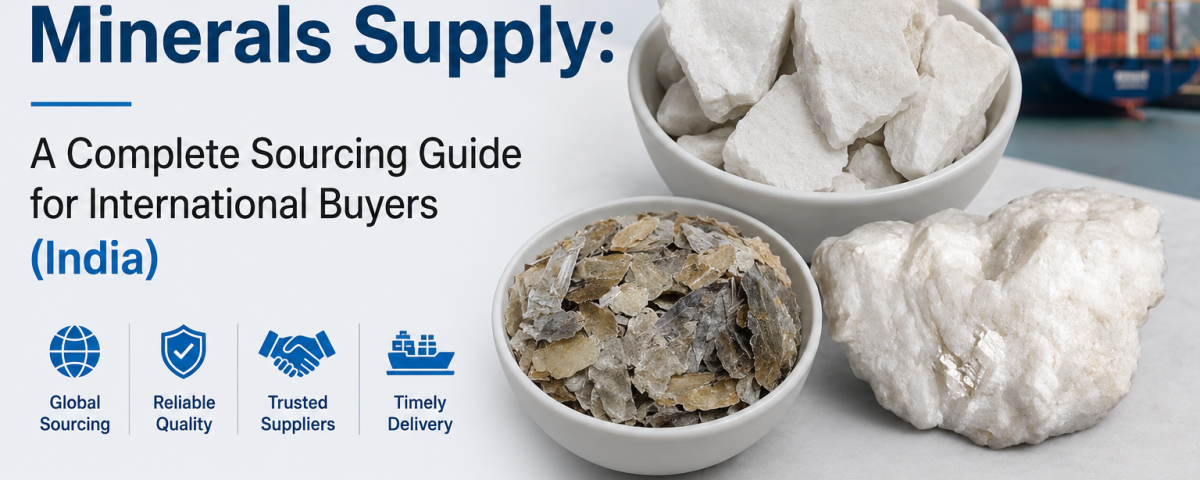
Sourcing industrial minerals across borders is rarely as simple as placing an order. Many international buyers have faced the same frustrations: a shipment that arrives with inconsistent quality, a supplier who stops replying once the deal is signed, missing export documents that hold goods at customs, or material that does not match the agreed specification. A single bad batch can stop a production line and damage relationships with your own customers.
For procurement managers, importers, and manufacturers, these problems share one root cause the wrong supplier. This is why reliable bulk industrial minerals supply depends far more on who you partner with than on the price you negotiate. The right supplier protects your production schedule, your product quality, and your reputation. This guide explains what industrial minerals are, why so many global manufacturers source them from India, and exactly what to check before you choose a bulk mineral supplier.
What Are Industrial Minerals and Why Are They Important?
Industrial minerals are naturally occurring, non-metallic minerals used as raw materials in manufacturing. They are not valued for metal content but for their physical and chemical properties whiteness, hardness, particle size, chemical purity, or heat resistance. They form the base of products used every day across construction, glass, ceramics, paint, plastics, paper, and rubber.
Here are the most widely traded industrial minerals and where they are used:
- Talc — a soft mineral used in plastics, paints, paper, ceramics, and rubber as a filler and reinforcing agent.
- Dolomite — used in steelmaking, glass, ceramics, and construction; valued for its calcium and magnesium content.
- Kaolin (China Clay) — a white clay used in paper coating, ceramics, paint, and rubber.
- Quartz Powder — high-purity silica used in glass, ceramics, paint, and engineered stone.
- Silica Sand — the main raw material for glass, foundry casting, and construction.
- Mica — used in paints, cosmetics, electrical insulation, and plastics for its heat resistance and shine.
Because these minerals feed so many industries, a steady, specification-accurate supply is essential to global manufacturing.
Why Global Manufacturers Source Industrial Minerals from India
India has become a preferred origin for buyers in Indonesia, Vietnam, Thailand, Turkey, Egypt, Japan, South Korea, Nigeria, and across the Middle East, Africa, and Europe. Several practical reasons drive this:
- Abundant mineral reserves — India holds large, geologically diverse deposits, supporting consistent long-term availability.
- Competitive pricing — efficient mining and processing keep landed costs attractive even after freight.
- Established export infrastructure — multiple major ports and experienced freight networks simplify international shipping.
- Technical expertise — Indian processors can grind, classify, and refine minerals to meet specific micron and purity requirements.
- Quality control standards — established suppliers run laboratory testing and follow recognised quality processes.
- Long-term supply capability — scale and reserves allow suppliers to honour repeat bulk contracts year after year.
Planning a bulk mineral requirement? Pratibha Refractory Minerals works with international buyers to match material specifications to the right product and grade. Share your specification to discuss feasibility.
Key Factors International Buyers Should Evaluate Before Choosing a Bulk Mineral Supplier
Use the checks below as a procurement checklist before signing any bulk contract.
Product Quality Standards
Ask for the exact specification of chemical purity, particle size, brightness, moisture, and impurity limits and confirm the supplier can meet it on every shipment, not just the first sample.
Consistency of Supply
A reliable supplier maintains stable quality across batches. Request data from previous production runs to confirm consistency over time.
Export Experience
Shipping minerals internationally requires knowledge of documentation, packaging, and freight. An experienced exporter prevents customs delays and shipping errors.
Customization Capability
Many applications need specific grades. Check whether the supplier can adjust micron size, purity, or coating to match your process.
Packaging Standards
Bulk minerals can absorb moisture or get contaminated in transit. Confirm that packaging bags, jumbo bags, or containers protect the material across long sea voyages.
Logistics Management
On-time delivery depends on freight coordination. A supplier with strong logistics support reduces the risk of delayed shipments.
Technical Support
Good suppliers help you select the right grade and solve application issues. This support is valuable when minerals affect your final product quality.
Certifications and Testing
Request test reports for each shipment. Independent or in-house laboratory testing confirms the material matches the agreed specification.
Industrial Minerals Commonly Supplied in Bulk
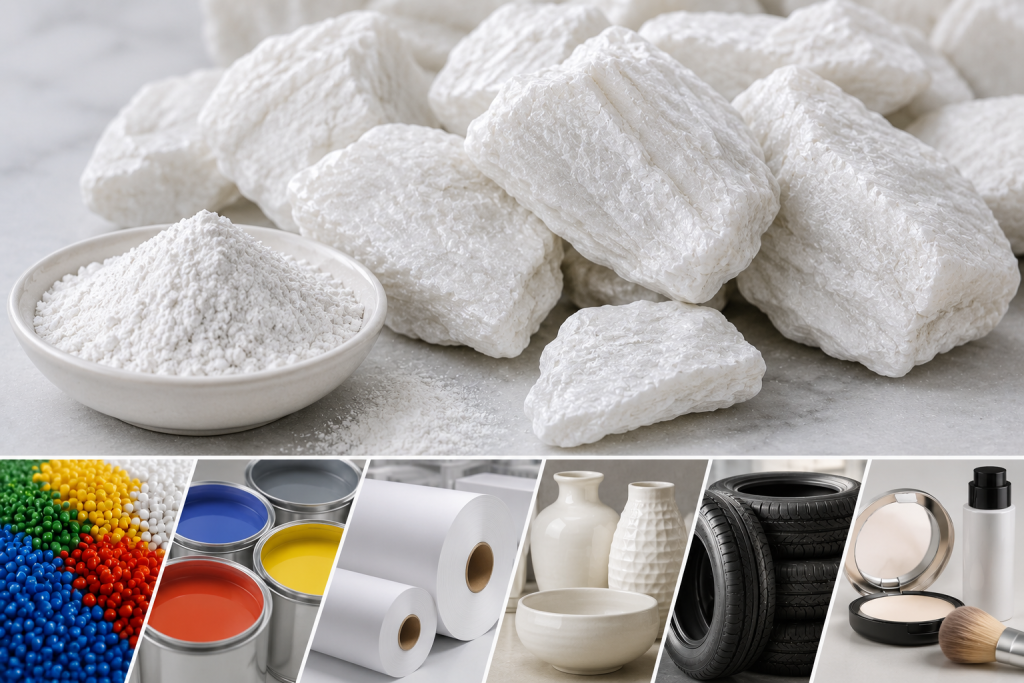
Talc Powder
- Applications: Plastics, paints, paper, ceramics, rubber, and cosmetics as a filler and reinforcing agent.
- Industries served: Plastic compounding, paint manufacturing, paper coating, and ceramic production.
- Quality considerations: Whiteness, particle size, and low abrasiveness are critical; impurity control matters for food-grade or cosmetic use.
- Buyer requirements: Specify brightness, micron size, and whether the application is food-contact or cosmetic grade.
Dolomite Powder
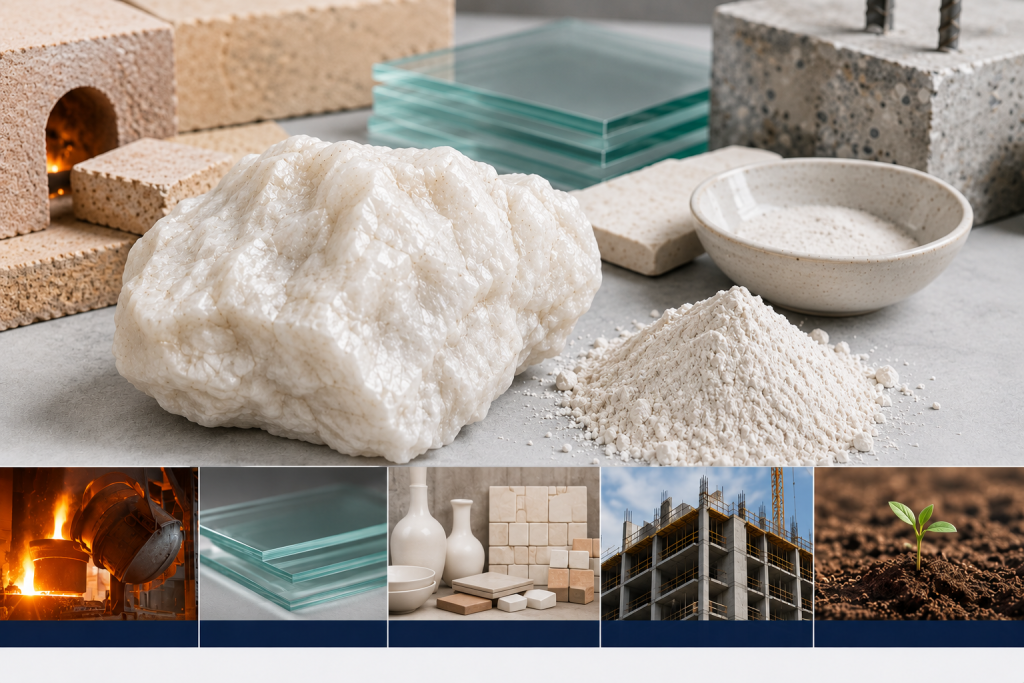
- Applications: Steel refractories, glass, ceramics, construction, and soil treatment.
- Industries served: Steelmaking, glass and ceramic plants, and construction material producers.
- Quality considerations: A consistent calcium-to-magnesium ratio and low silica are important for refractory and glass uses.
- Buyer requirements: Confirm chemical analysis and required mesh size for the end application.
Kaolin Clay
- Applications: Paper coating, ceramics, paint, rubber, and fiberglass.
- Industries served: Paper mills, ceramic manufacturers, and paint producers.
- Quality considerations: Brightness, particle size distribution, and low iron content drive quality.
- Buyer requirements: State the brightness level and whether calcined or hydrous kaolin is needed.
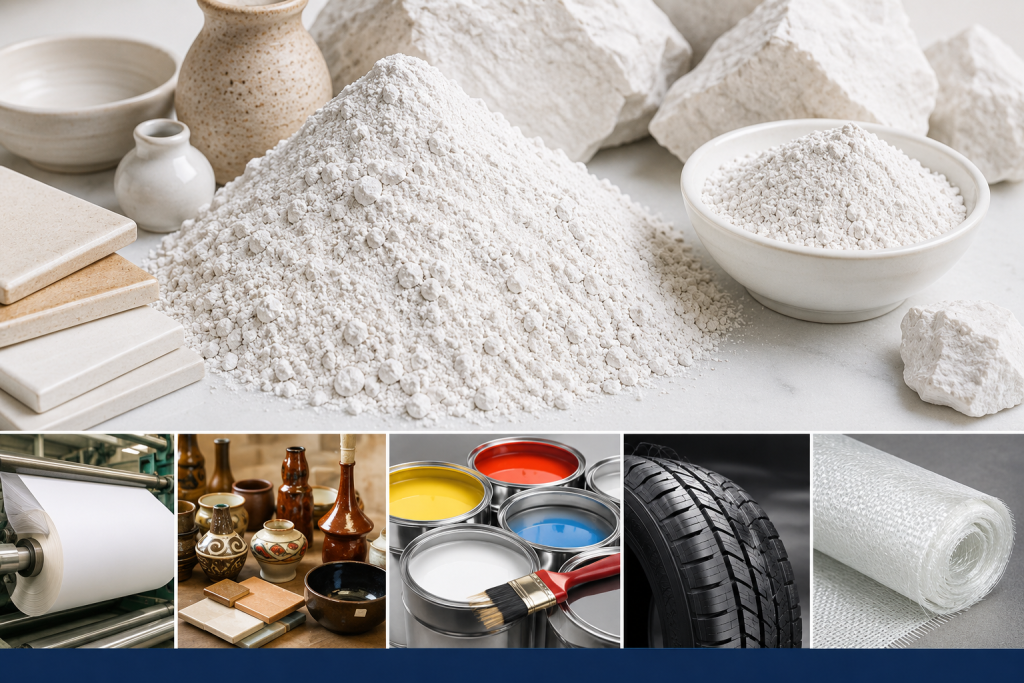
Quartz Powder
- Applications: Glass, ceramics, paint, engineered stone, and silica-based products.
- Industries served: Glass plants, ceramic units, and engineered-stone manufacturers.
- Quality considerations: Silica purity and controlled iron content are essential for clear glass and bright finishes.
- Buyer requirements: Specify SiO₂ purity, iron limits, and micron size.
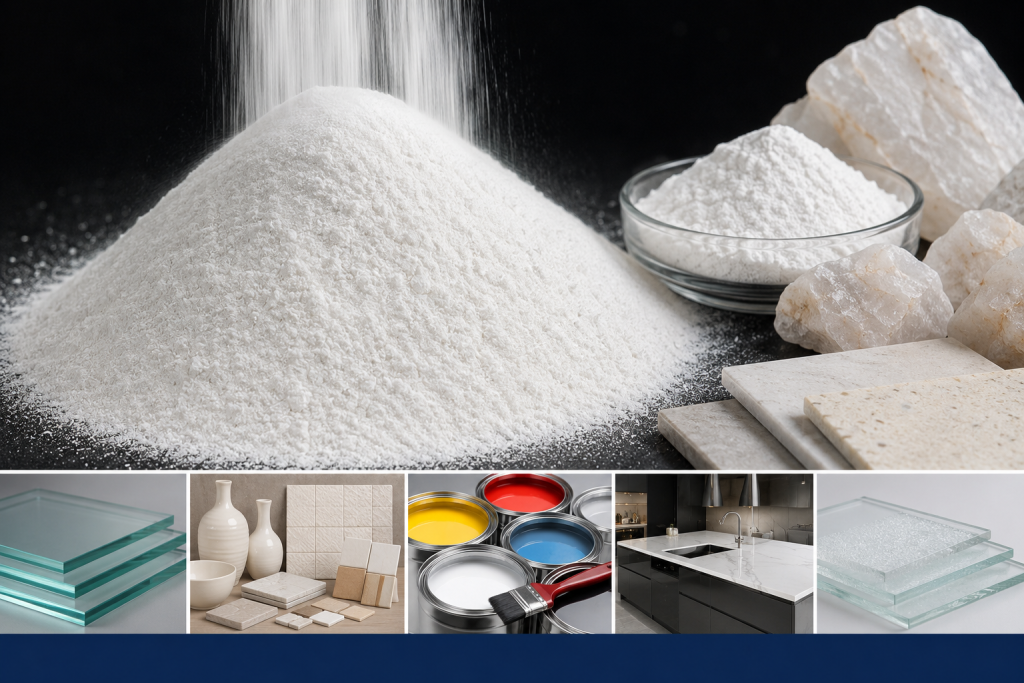
Silica Sand
- Applications: Container and float glass, foundry casting, and construction.
- Industries served: Glass manufacturers, foundries, and construction material companies.
- Quality considerations: Grain size distribution and chemical purity define suitability for glass and foundry use.
- Buyer requirements: Confirm grain size, silica content, and clay/iron limits.
Mica Powder
- Applications: Paints, coatings, plastics, cosmetics, and electrical insulation.
- Industries served: Paint and coating producers, plastic compounders, and electrical component makers.
- Quality considerations: Aspect ratio, particle size, and purity affect shine, strength, and insulation.
- Buyer requirements: Specify mesh size, mica type, and whether wet-ground or dry-ground is required.
Quick reference for two minerals buyers often confuse:
| Property | Quartz Powder | Silica Sand |
| Form | Fine ground powder | Granular sand |
| Particle size | Micron-level (powder) | Coarser grains |
| Typical use | Paint, engineered stone, fine ceramics | Glass batch, foundry casting |
| Key spec | SiO₂ purity, micron size | Grain size, iron content |
Common Mistakes International Buyers Make When Sourcing Industrial Minerals
- Choosing on price alone — the cheapest quote often hides inconsistent quality or weak logistics, which costs more later.
- Ignoring technical specifications — ordering by mineral name without exact specs leads to material that fails in production.
- Skipping supplier audits — not checking a supplier’s processing and quality systems increases the risk of surprises.
- Not verifying test reports — accepting claims without batch-level laboratory data is a frequent and avoidable error.
- Poor logistics planning — underestimating lead times, packaging needs, and documentation causes delays at port.
Why Long-Term Supply Partnerships Matter in Industrial Mineral Procurement
One-off purchases expose buyers to price swings and quality risk. A long-term partnership with a dependable supplier delivers measurable advantages:
- Stable pricing — agreed terms reduce exposure to short-term market spikes.
- Reliable inventory — planned supply keeps your production running without gaps.
- Quality consistency — a familiar supplier understands your specification and reproduces it reliably.
- Faster production planning — predictable deliveries let you schedule production with confidence.
- Reduced sourcing risk — fewer surprises in quality, paperwork, and delivery over time.
Why Pratibha Refractory Minerals Is a Trusted Industrial Mineral Exporter
Pratibha Refractory Minerals supports international buyers looking for dependable bulk industrial minerals supply from India. The company focuses on the factors that matter most to procurement teams:
- An export-oriented company set up to serve overseas buyers.
- Experience supplying minerals to international markets.
- The ability to process material to custom specifications.
- Quality-focused processes with material testing.
- Reliable logistics and documentation support for smooth shipping.
- A range of mineral categories under one supplier.
The aim is straightforward: consistent material, clear communication, and on-time delivery so your production stays on schedule.
Final Thoughts
Reliable bulk industrial minerals supply is built on disciplined supplier selection, not on the lowest quote. Before you commit to a contract, prioritise three things: a clearly written specification, proof of batch-level quality and testing, and a supplier with genuine export experience and logistics capability. Run a short audit, request sample test data, and confirm packaging and documentation upfront.
Buyers who treat sourcing as a long-term partnership rather than a series of one-off deals see steadier quality, fewer delays, and lower overall risk. If you are evaluating suppliers for an upcoming requirement, reach out to Pratibha Refractory Minerals to discuss your specification, target grades, and shipping needs. A short conversation early can save weeks of trouble later.
Frequently Asked Questions
How do I choose an industrial mineral supplier?
Match the supplier to a written specification, then verify quality consistency, batch test reports, export experience, packaging standards, and logistics capability. Avoid choosing on price alone, and confirm the supplier can meet your spec on repeat shipments not just the first sample.
What industries use talc powder?
Talc powder is used in plastics, paints, paper, ceramics, rubber, and cosmetics. It acts as a filler and reinforcing agent that can improve strength, finish, and cost efficiency, depending on grade and purity.
What is the difference between quartz powder and silica sand?
Both are silica-based. Quartz powder is finely ground to a micron level and used in paint, engineered stone, and fine ceramics, while silica sand is granular and used in glass batches and foundry casting. The right choice depends on particle size and purity needs.
How is mineral quality tested before export?
Reputable suppliers run laboratory tests on each batch, checking chemical purity, particle size, brightness, moisture, and impurity limits, then share the test report. Buyers should request batch-level data rather than relying on a one-time sample.
Can industrial minerals be customized for specific applications?
Yes. Suppliers can adjust micron size, chemical purity, brightness, and surface treatment to suit specific processes. Share your application and target specification so the supplier can recommend the correct grade.
What documents are required for mineral imports?
Typical documents include a commercial invoice, packing list, certificate of analysis or test report, bill of lading, and certificate of origin. Exact requirements vary by destination country, so confirm import rules with your local customs authority or freight forwarder.
Why source industrial minerals from India?
India offers abundant reserves, competitive pricing, established export infrastructure, technical processing expertise, and suppliers capable of long-term bulk supply making it a practical origin for buyers across Asia, the Middle East, Africa, and Europe.