



- Call for Sales Enquiries

- +91-9413034047
- +91-294-2413244
- info@pratibharefractory.com

Shipping Minerals from Udaipur: Port Options and Transit Time to USA, Japan & China

Kaolin Powder Price & Suppliers in India for Ceramics & Paints
November 12, 2026Shipping Minerals from Udaipur: Port Options and Transit Time to USA, Japan & China
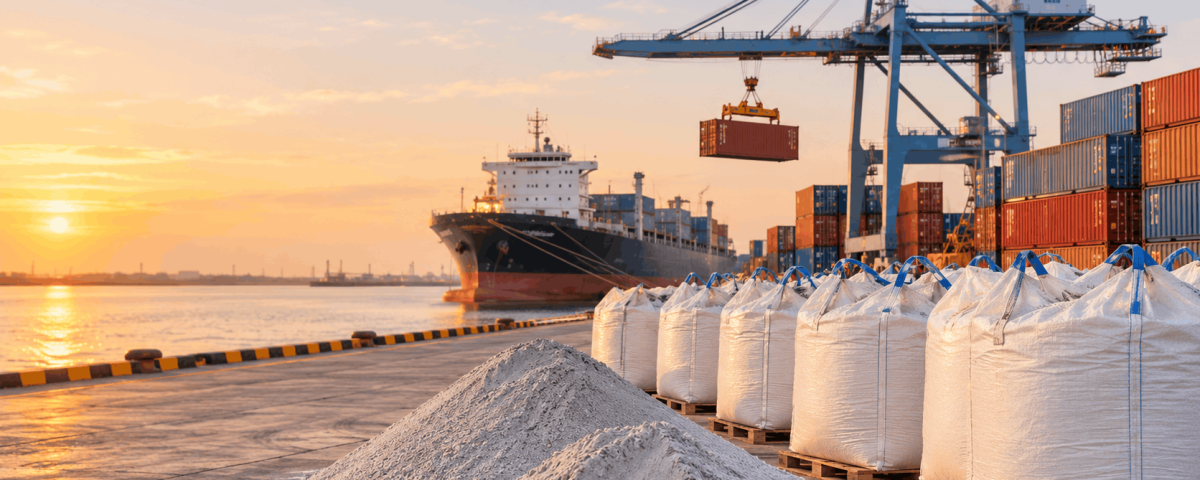
Udaipur sits in the heart of Rajasthan, one of India’s most important regions for industrial minerals. For international buyers, the question after sourcing is rarely whether the material is available. It is how to move bulk or containerized cargo from an inland city to a foreign port on time and at a predictable cost. Choosing the right departure port, understanding realistic transit windows, and preparing the correct export documents are the three decisions that shape most mineral export projects. This guide covers each of them for importers in the USA, Japan, and China who want to export minerals from India through a practical, logistics-first lens.
Why Udaipur Is an Important Hub for Mineral Exports
Rajasthan has a long history of mineral extraction and processing, and Udaipur serves as a regional centre for many industrial minerals. Talc and soapstone, dolomite, china clay, quartz, silica sand, and mica are all produced or processed across the wider region. Each has different handling needs, from moisture-sensitive powders that require sealed liner bags to coarser materials that move well in bulk.
Udaipur’s road and rail connectivity to western Indian ports is the key advantage for exporters here. Most shipments travel by road to a Gujarat or Maharashtra port, where they are consolidated into containers or loaded as bulk cargo. Efficient inland transport is therefore as important as the ocean leg. Delays in trucking or in gate-in at the port often add more uncertainty than the sea voyage itself.
Major Indian Ports for Shipping Minerals from Udaipur
Four western Indian ports are commonly considered for mineral cargo originating from Udaipur. Each suits a different mix of container and bulk requirements.
Mundra Port, Gujarat is one of India’s largest privately operated ports and handles a wide range of container and bulk cargo. Its strong container services to multiple global regions make it a frequent choice for exporters in western Rajasthan.
Kandla (Deendayal) Port, Gujarat is a long-established major port with facilities for both bulk and container cargo. It is well suited to shipments where bulk handling is a priority.
Nhava Sheva (JNPT), Maharashtra is India’s largest container port and a major gateway for export volumes. Its frequency of sailings to the USA, Japan, and China is a significant advantage for buyers who need schedule flexibility.
Pipavav Port, Gujarat is a further option for container and general cargo. It can be worth comparing on schedule and cost when the other ports are congested.
| Port | State | Approx. Distance from Udaipur | Potential Export Use |
|---|---|---|---|
| Mundra | Gujarat | Verify road distance | Container and bulk cargo |
| Kandla | Gujarat | Verify road distance | Bulk and container cargo |
| Nhava Sheva (JNPT) | Maharashtra | Verify road distance | Container shipments |
| Pipavav | Gujarat | Verify road distance | Container and general cargo |
Road distances and trucking times should be confirmed with a freight forwarder for each shipment, since they depend on the route, the time of year, and local traffic conditions.
Shipping Minerals from India to the USA
Mineral exports to the United States usually move by container from a western Indian port through the Suez Canal, or in some cases via the Cape of Good Hope, depending on current routing and carrier networks. Major US destination ports include Los Angeles, Long Beach, New York/New Jersey, and Houston. The choice depends on where the importer’s warehouse or processing facility is located, since inland rail or trucking from the port can add significant time and cost.
Indicative ocean transit times from western India to US West Coast ports are often in the range of several weeks, while East Coast and Gulf ports typically take longer. Routing changes, transshipment at hub ports, and vessel schedules can all shift these windows. Importers should treat any single figure as a planning estimate rather than a guaranteed date.
Containerized shipments suit most packaged industrial minerals, particularly those in bags or lined drums. Bulk cargo is possible for larger volumes but requires a terminal that can handle the material and an importer that can receive it efficiently.
Shipping Minerals from India to Japan
Japan is a shorter sea route from western India than the USA, and it is a steady market for industrial minerals used in ceramics, refractories, paints, and plastics. Common Japanese destination ports include Tokyo, Yokohama, Osaka, and Kobe. Shipments are typically consolidated in containers at a western Indian port and sent on regular liner services.
Indicative ocean transit times to Japan are generally shorter than to the US, often in the range of a few weeks depending on the departure port and any transshipment. Japanese importers are known for detailed specifications and strict documentation checks, so the quality certificate and packing details should be agreed before the shipment is booked. Importers should also confirm port-side handling requirements and any delivery appointment systems at the destination terminal.
Shipping Minerals from India to China
China is a significant trade partner for Indian industrial minerals, and shipments from western Indian ports are common. Major Chinese destination ports include Shanghai, Ningbo-Zhoushan, Qingdao, and Tianjin. Services are frequent, and containerized shipments are the most usual format for packaged minerals.
Indicative ocean transit times to Chinese ports are often within a few weeks, though this varies with routing and port congestion at the destination. Importers should confirm the correct import documentation and any product-specific registration or inspection requirements before dispatch, as these can change and affect clearance timing.
Transit Time Comparison: India to USA, Japan and China
The table below gives indicative port-to-port ocean transit ranges. These are planning figures only and should be verified with a carrier before any commitment.
| Destination Country | Major Destination Ports | Indicative Ocean Transit Time |
|---|---|---|
| USA | Los Angeles, Long Beach, New York/New Jersey, Houston | Several weeks, longer for East Coast and Gulf ports |
| Japan | Tokyo, Yokohama, Osaka, Kobe | Typically a few weeks |
| China | Shanghai, Ningbo-Zhoushan, Qingdao, Tianjin | Typically a few weeks |
It is important to distinguish port-to-port ocean transit from total door-to-door delivery time. Door-to-door timing adds inland trucking from Udaipur to the departure port, export clearance, port dwell time, destination customs clearance, and onward transport to the buyer’s facility. For many shipments, these additional steps add as much time as the ocean voyage.
Schedules vary with the shipping line, departure port, transshipment, vessel availability, and destination terminal conditions. Importers planning around production deadlines should build in buffer time.
Export Documentation Required for Shipping Minerals from India
Mineral exports from India require a set of standard documents, and the exact list depends on the product, its classification code, the destination country, and applicable regulations.
The Import Export Code (IEC) is the registration issued by the Directorate General of Foreign Trade that exporters need before shipping. The commercial invoice states the sale terms, product description, quantity, and value, and is used by customs in both countries. The packing list describes how the cargo is packed, with weights and dimensions per package. The shipping bill is the export declaration filed with Indian customs. The bill of lading is the transport document issued by the carrier and serves as evidence of shipment and title to the goods. The certificate of origin confirms where the goods were produced, which may be needed to claim preferential duty rates.
Depending on the mineral and destination, buyers may also request a certificate of analysis or quality test report, material safety data sheets, and phytosanitary or other inspection certificates where relevant. Importers should confirm their own country’s requirements with their customs broker before the order is placed. An exporter should also verify the correct HS code for the product, since misclassification is a common cause of delays.
Factors Affecting Mineral Shipping Costs
Shipping cost is shaped by several variables that interact with each other. Mineral type and quantity determine whether the cargo moves as containers or bulk, and the density of the material affects how many tonnes fit in a container. Packaging requirements, such as moisture-proof liners or palletisation, add material and handling cost but protect the product during transit.
Inland transport from Udaipur to the departure port is a separate cost that exporters should account for explicitly. Port handling charges, ocean freight rates, customs clearance fees, and cargo insurance all contribute to the total. At the destination, terminal charges, delivery to the importer’s site, and any storage costs complete the picture.
Shipments are generally booked as either Full Container Load (FCL) or Less than Container Load (LCL). FCL suits larger orders where a single importer fills a container and avoids sharing handling with other cargo. LCL can be cost-effective for smaller volumes, though it usually involves longer consolidation and deconsolidation times. Bulk cargo may be suitable for very large, consistent volumes where the importer has the handling infrastructure to receive it.
Freight rates change frequently, so any quote should be treated as valid only for a stated period and under stated conditions.
How to Choose a Reliable Mineral Exporter in India
Selecting an exporter is as important as selecting a port. Buyers should look for consistent product quality, with a clear ability to meet the grade and particle-size specifications stated in the contract. Production and supply capacity matter for repeat orders, as does the ability to maintain consistent quality across batches.
Proper packaging is a practical test of an exporter’s experience. Mineral exporters who understand moisture protection, bag integrity, and container loading usually produce fewer damage claims. Documentation support is equally important, since a supplier who prepares accurate invoices, packing lists, and certificates reduces the risk of customs delays.
Finally, communication and shipment coordination separate reliable partners from occasional ones. Buyers should expect clear timelines, timely shipment updates, and a single point of contact for each order.
Pratibha Refractory Minerals is an established Indian mineral manufacturer and exporter, founded in 1987, with export experience dating back to 1995. Buyers evaluating suppliers in the Udaipur region can use the criteria above when comparing options, including the company’s mineral portfolio, which is described on its [product range page].
Why Consider Pratibha Refractory Minerals for Industrial Mineral Requirements?
Pratibha Refractory Minerals brings decades of experience in the industrial mineral sector, with manufacturing and processing capabilities and an export-oriented operation. Its product range covers industrial minerals relevant to refractory, ceramic, and other industrial applications. The company’s focus is on consistent quality and bulk supply for buyers who need dependable, repeatable shipments.
Buyers should confirm specific shipping timelines, port arrangements, certifications, and delivery terms directly with the company for each order, as these depend on the product, quantity, and destination.
Frequently Asked Questions
1. Which port is best for exporting minerals from Udaipur?
The best port depends on the product, the volume, and the destination. Mundra and Kandla are commonly considered for western Rajasthan shipments, while Nhava Sheva offers the widest container schedules. Comparing cost, transit time, and sailing frequency for each shipment is the most reliable approach.
2. How can I export minerals from India to the USA?
Export typically involves registering with the Directorate General of Foreign Trade for an IEC, arranging inland transport to a western Indian port, and shipping containerized or bulk cargo to a US port. The exporter prepares the commercial invoice, packing list, shipping bill, bill of lading, and certificate of origin, and the importer’s customs broker handles US entry.
3. How long does it take to ship minerals from India to the USA?
Ocean transit from western India to US ports is often several weeks, with East Coast and Gulf ports typically taking longer. Door-to-door time is longer once inland transport, port handling, and customs are included.
4. What is the shipping time from India to Japan?
Indicative ocean transit to Japanese ports is typically a few weeks, depending on the departure port and routing. Total delivery time is longer once inland and clearance steps are included.
5. How long does mineral shipping from India to China take?
Indicative ocean transit to major Chinese ports is typically a few weeks. Actual timing depends on routing, vessel schedules, and port conditions at both ends.
6. Which documents are required for mineral exports from India?
The core documents are the IEC, commercial invoice, packing list, shipping bill, bill of lading, and certificate of origin. Quality certificates and destination-specific compliance documents may also be needed.
7. Can industrial minerals be exported in bulk containers?
Many packaged industrial minerals move well in containers, which offer protection and easier handling. Bulk cargo is possible for large, consistent volumes where the terminal and importer can handle it.
8. What factors affect international mineral shipping costs?
Key factors include mineral type and quantity, packaging, container availability, inland transport, port charges, ocean freight, customs clearance, insurance, and destination delivery.
Conclusion and CTA
Shipping industrial minerals from Udaipur to the USA, Japan, or China is a manageable process when the departure port, shipping method, and documentation are planned together. Port choice affects cost and schedule, realistic transit estimates protect production timelines, and a reliable exporter keeps the entire chain running smoothly.
Looking for a reliable Indian supplier of industrial minerals? Contact Pratibha Refractory Minerals to discuss your product specifications, bulk requirements, and export enquiries.