

- Call for Sales Enquiries

- +91-9413034047
- +91-294-2413244
- info@pratibharefractory.com

Minerals Used in Steel Industry: Types, Applications and Importance

Top Silica Sand Producing States in India
September 1, 2026
Quartz Powder Manufacturer UAE: A Sourcing Guide for Buyers
September 8, 2026Minerals Used in Steel Industry: Types, Applications and Importance
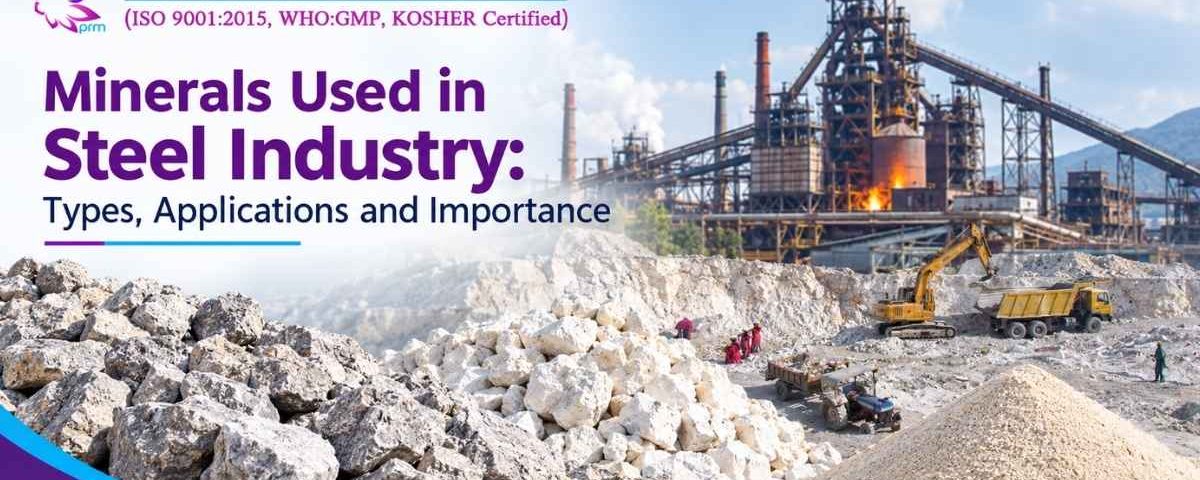
Steel is often described as the backbone of modern infrastructure, but few people outside the industry think about what actually goes into making it. Behind every beam, coil, and sheet of steel is a carefully managed process that depends heavily on industrial minerals. From the initial processing of raw materials to the lining of furnaces that reach extreme temperatures, minerals used in steel industry operations play a role at almost every stage of production.
These minerals are not limited to a single function. Some act as fluxes that help remove impurities, some form the slag that protects molten metal, and others are used as refractory materials that allow furnaces and vessels to withstand intense heat without breaking down. Understanding these different roles helps steel manufacturers, procurement teams, and foundry professionals make informed decisions about the raw materials they source.
This article looks at the main minerals used in steel manufacturing, explains how each one contributes to the process, and outlines the factors worth considering when selecting industrial minerals for steel plant applications. It is worth noting upfront that the exact minerals and quantities used vary depending on the steelmaking process, the type of furnace, and the specific application involved.
What Are the Main Minerals Used in the Steel Industry?
Steel production is a multi-stage process, and different minerals are suited to different stages. Broadly, the minerals used in steel manufacturing fall into a few categories: raw materials that contribute to the metallurgical process, fluxes that assist in impurity removal and slag formation, and refractory minerals that protect equipment from high-temperature damage. The table below gives a quick overview of some of the industrial minerals commonly associated with steel industry applications.
| Mineral | Primary Role | Common Industrial Application |
| Dolomite | Flux and refractory material | Steelmaking flux, refractory linings for furnaces and converters |
| Limestone | Flux | Impurity removal and slag formation during steelmaking |
| Silica / Quartz | Refractory and process material | Refractory linings, moulding sand, ferroalloy and foundry applications |
| Magnesite | Refractory material | High-temperature refractory bricks and linings for furnaces |
| Bauxite / Fireclay | Refractory material | Refractory products used in furnace construction (application-dependent) |
Each of these minerals is discussed in more detail below, along with the reasons they are relevant to steel manufacturing and refractory applications.
1. Dolomite in the Steel Industry
Dolomite is a carbonate mineral composed primarily of calcium magnesium carbonate. It occurs naturally in sedimentary rock formations and is processed into different grades depending on the intended industrial application.
In the steel industry, dolomite is relevant in two main ways. First, calcined dolomite is used as a flux during steelmaking, where it helps adjust the chemistry of the slag and assists in the removal of impurities such as phosphorus and sulphur from molten metal. Second, dolomite is used to manufacture refractory bricks and linings that are applied inside furnaces, ladles, and converters, where resistance to extreme heat is essential.
Because dolomite-based refractories come into direct contact with molten metal and high-temperature slag, the quality and composition of the dolomite used matters a great deal. Variations in magnesium oxide and calcium oxide content, along with impurity levels, can affect how well the material performs under thermal and chemical stress. This is why steel plants typically look for consistent, well-characterised dolomite rather than treating it as a generic bulk commodity.
2. Limestone and Its Role in Steel Manufacturing
Limestone, composed mainly of calcium carbonate, is one of the most widely used flux materials in steel manufacturing. When added to the steelmaking process, limestone decomposes and reacts with impurities present in the molten metal, helping to draw them into the slag layer that forms on top of the melt.
This process of impurity removal and slag formation is important because it allows steelmakers to control the final chemical composition of the steel. Limestone’s role as a flux means it directly influences slag basicity, which in turn affects how efficiently sulphur, phosphorus, and other unwanted elements are separated from the metal during processing.
The industrial significance of limestone extends beyond a single furnace type. It is used across multiple steelmaking routes, and its consistent availability and reactivity make it a staple raw material in most integrated and secondary steel plants.
3. Silica and Quartz in Steel Industry Applications
Silica and quartz are both forms of silicon dioxide, though they differ slightly in their natural occurrence and processing. Silica sand is typically mined and processed for use in industrial applications, while quartz refers more specifically to the crystalline mineral form of silicon dioxide.
In steel and foundry-related operations, silica and quartz have several relevant applications. Silica sand is commonly used in moulding and casting processes, while silica-based refractories are used in specific furnace linings where their high melting point and resistance to certain chemical environments are useful. Quartz, in its processed form, also finds use in ferroalloy production and other high-temperature industrial processes connected to the broader steel value chain.
Because these applications are sensitive to material characteristics, purity levels and particle size can be important depending on the specific use case. A refractory application, for instance, may require different specifications than a moulding sand application. It is worth noting that suitability depends on the intended process, and buyers typically evaluate silica or quartz against the technical requirements of their specific application rather than assuming a single grade works for every use.
4. Magnesite and Other Refractory Minerals
Refractory minerals are materials capable of withstanding very high temperatures without losing their structural integrity or chemical stability. In steel manufacturing, refractory linings are used in furnaces, ladles, converters, and other vessels that come into direct or indirect contact with molten metal and slag.
Magnesite, composed primarily of magnesium carbonate, is one of the key raw materials used to produce magnesia-based refractories. These refractories are valued for their high melting point and resistance to basic slag environments, which makes them suitable for certain furnace lining applications where alternative refractory types may not perform as well.
Beyond magnesite, other refractory minerals such as fireclay and bauxite-based materials are also used in furnace construction, depending on the specific thermal and chemical conditions involved. The common thread across all refractory minerals is that they need to maintain performance under repeated thermal cycling, which is why quality control at the raw material stage is closely tied to the reliability of the final refractory product.
How Are Minerals Used During Steel Manufacturing?
Minerals are involved at multiple points across the steelmaking process rather than being added at a single stage. The following steps offer a simplified view of where different minerals typically come into play, though the exact sequence can vary depending on the steelmaking route used, such as the blast furnace-basic oxygen furnace route or the electric arc furnace route.
Step 1: Raw Material Preparation
Before steelmaking begins, raw materials such as iron ore, coke, and various minerals are prepared, sized, and, where necessary, processed to meet the specifications required for the next stage of production.
Step 2: Iron and Steel Processing
Iron-bearing materials are processed into molten iron or steel through furnace-based operations. This is where the base metal is produced before it is refined further.
Step 3: Flux and Slag Formation
Flux materials such as limestone and dolomite are introduced to help form slag and assist in removing impurities like sulphur and phosphorus from the molten metal.
Step 4: High-Temperature Furnace Operations
Throughout the melting and refining stages, furnaces and vessels operate at very high temperatures. Refractory linings made from minerals such as dolomite, magnesite, and silica-based materials protect this equipment from thermal and chemical wear.
Step 5: Refractory and Industrial Applications
Beyond the core steelmaking process, minerals continue to play a role in related industrial applications, including casting, moulding, and the maintenance of furnace linings between production cycles.
Why Are Industrial Minerals Important for Steel Plants?
The importance of industrial minerals in steel manufacturing comes down to a combination of factors that directly affect how efficiently and reliably a steel plant can operate.
- High-temperature performance: Furnaces and refractory linings must withstand extreme heat repeatedly without degrading.
- Chemical composition: The mineral composition of fluxes and refractories directly affects slag chemistry and impurity removal.
- Consistency: Variations in mineral quality from batch to batch can affect process stability and product quality.
- Material quality: Impurities or inconsistencies in raw minerals can compromise both the steelmaking process and refractory lifespan.
- Process efficiency: Reliable mineral inputs support smoother furnace operations and reduce unplanned downtime.
- Application-specific requirements: Different furnace types and steelmaking routes call for different mineral specifications.
Taken together, these factors explain why steel plants tend to treat mineral sourcing as a technical decision rather than a purely commercial one.
Factors to Consider When Selecting Minerals for Steel Industry Applications
Selecting the right industrial minerals for a steel plant involves more than comparing prices. The following factors are commonly considered by procurement and technical teams:
- Chemical composition: Whether the mineral’s chemical profile matches the requirements of the intended application.
- Purity: The presence of impurities that could affect performance or process outcomes.
- Particle size: Suitable sizing for the specific process, whether it is a flux, refractory, or moulding application.
- Moisture content: Excess moisture can affect handling, storage, and processing behaviour.
- Consistency: Uniform quality across batches to support stable, repeatable process performance.
- Application requirements: Matching the mineral grade to the specific furnace type or process stage it will be used in.
- Bulk supply requirements: The ability to source consistent volumes for ongoing industrial operations.
- Supplier reliability: Working with suppliers who can provide consistent material quality and dependable delivery.
Industrial Minerals Used in Steel Industry Applications
Businesses sourcing minerals for steel industry applications generally benefit from evaluating material specifications against their intended use before making a purchasing decision, since the same mineral can be offered in different grades and particle sizes depending on the application it is meant for.
Pratibha Refractory Minerals supplies industrial mineral products for a range of industrial applications. Businesses with specific material or bulk requirements can discuss their application requirements with the company to identify suitable mineral solutions.
For steel plants and related manufacturers exploring options such as Dolomite Powder, Quartz Powder, Silica Sand, and other Industrial Minerals and Refractory Materials, it can help to review technical specifications and speak directly with suppliers about intended applications. Interested businesses can Contact Us to discuss requirements in more detail.
Frequently Asked Questions About Minerals Used in Steel Industry
1. Which minerals are commonly used in the steel industry?
Minerals commonly associated with steel manufacturing include dolomite, limestone, silica, quartz, and magnesite, along with other refractory minerals such as fireclay and bauxite-based materials, depending on the specific process and application.
2. Why is dolomite used in steel manufacturing?
Dolomite is used both as a flux to assist in impurity removal during steelmaking and as a raw material for refractory linings that protect furnaces and vessels from high-temperature wear.
3. What is the role of limestone in steel production?
Limestone acts as a flux during steelmaking. It helps form slag and supports the removal of impurities such as sulphur and phosphorus from molten metal.
4. Is silica used in the steel industry?
Yes, silica is used in several related applications, including moulding sand for casting and certain refractory linings, depending on the specific process requirements.
5. What are refractory minerals?
Refractory minerals are materials capable of withstanding very high temperatures without losing structural or chemical stability. They are used to line furnaces, ladles, and converters in steel plants.
6. How do steel plants select industrial minerals?
Steel plants typically evaluate minerals based on chemical composition, purity, particle size, moisture content, consistency, and how well the material matches the specific application it is intended for.
7. Why is mineral quality important in steel manufacturing?
Mineral quality directly affects process efficiency, slag chemistry, refractory lifespan, and overall product consistency, making it an important consideration rather than a secondary detail.
Conclusion
Steel manufacturing depends on a range of industrial minerals, each serving a distinct purpose. Dolomite and limestone play important roles as fluxes and refractory raw materials, silica and quartz support refractory and casting-related applications, and magnesite along with other refractory minerals help furnaces and vessels withstand extreme operating temperatures.
There is no single mineral that fits every steelmaking process. The right choice depends on the specific manufacturing route, furnace type, and application requirements involved, which is why technical evaluation matters as much as availability when sourcing these materials.
Looking for industrial minerals for your manufacturing requirements? Contact Pratibha Refractory Minerals to discuss your bulk or application-specific requirements.